
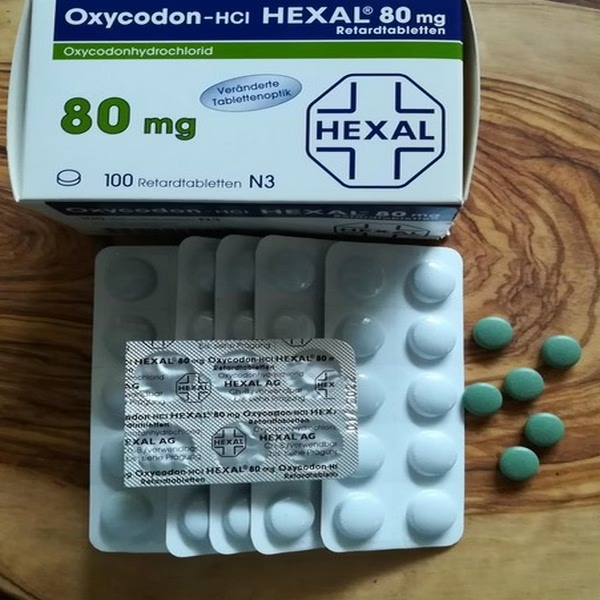


Description
WHAT IS OXYCODONE?
A semi-synthetic narcotic painkiller, oxycodone has traditionally been abused often by people who abuse drugs. A common opioid painkiller is oxycodone. It is used to treat extreme pain,
such as pain from cancer or pain following an operation or other
traumatic event. When conventional painkillers like paracetamol,
ibuprofen, and aspirin have failed to relieve the pain, they may also be
used for different types of chronic pain.
STREET NAMES:
Hillbilly Heroin, Kicker, OC, Ox, Roxy, Perc, Oxy
HOW IS OXYCODONE USED?
Oral
and intravenous abuse of oxycodone both exist. The tablets are either
broken up and sniffed, or they are dissolved in water, then injected.
Others inhale the vapors after heating a tablet that has been placed on a
piece of foil.
Standard tablets, capsules, liquid oxycodone, and injections all have rapid action.
They’re frequently used when you first start taking oxycodone to help
discover the proper dose. They’re used for pain that is anticipated to
linger for a brief period.
Over the course of 12 or 24 hours,
oxycodone slow-release tablets gradually release the drug into your
body. Although they take longer to begin functioning, they last longer.
They are applied to chronic pain. To treat chronic pain, your doctor
might occasionally advise both normal and slow-release oxycodone.
COMMON SIDE EFFECTS OF OXYCODONE:
Oxycodone
has a number of physiological effects, including cough suppression,
papillary constriction, constipation, respiratory depression, and pain
alleviation. The prolonged or chronic use of oxycodone with
acetaminophen may seriously harm the liver. The most frequent effects of
oxycodone on the brain are euphoria and feelings of relaxation, which
accounts for its high misuse potential. A number of tissues unrelated to
its analgesic action are directly affected by oxycodone.
The
respiratory center in the brain stem is one of these tissues. the
medulla’s cough center, the pupillary muscles, the digestive system, the
cardiovascular system, the endocrine system, and the immunological
system. Label The respiratory center is affected by oxycodone in a
dose-dependent manner, causing respiratory depression.
Also,
label The cough reflex is suppressed as a result of the cough center’s
function. Label The digestive tract’s peristalsis slows, the size of the
pupil shrinks, and muscular tone in the colon may rise, all of which
contribute to constipation. Notwithstanding, label Histamine may be
released into the cardiovascular system, causing pruritis, red eyes,
flushing, perspiration, and low blood pressure. Furthermore, Label
Prolactin levels may rise, cortisol levels may drop, and testosterone
levels may rise as a result of endocrine impacts.
USE OF OXYCODONE:
*For
an immediate-release formulation, the start of the action takes 10 to
30 minutes, whereas a controlled-release formulation takes roughly an
hour.
*For immediate-release formulations, the duration range is 3 to 6 hours, or 12 hours for controlled-release formulations.
*Stable plasma levels are attained in 24 to 36 hours, and the plasma half-life is 3 to 5.
*The hepatic enzymes CYP3A4 and CYP2D6 break down oxycodone to create the metabolites oxycodone and oxymorphone, respectively.
*The kidneys are responsible for eliminating these compounds from the body.






Reviews
There are no reviews yet.