
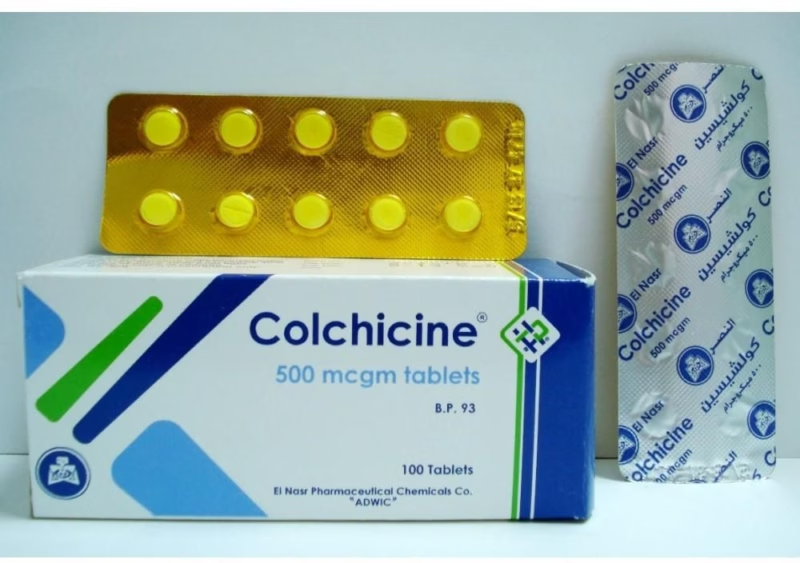


Description
Colchicine
is used mainly for the treatment and prevention of gout and for familial Mediterranean fever (FMF).
It
has a narrow therapeutic index, with no clear-cut distinction between
nontoxic, toxic, and lethal doses, causing substantial confusion among
clinicians.
Although colchicine poisoning is sometimes
intentional, unintentional toxicity is common and often associated with a
poor outcome.
Colchicine is readily absorbed after oral
administration, but undergoes extensive first-pass metabolism. It is
widely distributed and binds to intracellular elements.
Colchicine
is primarily metabolized by the liver, undergoes significant
enterohepatic re-circulation, and is also excreted by the kidneys.
THERAPEUTIC AND TOXIC DOSES:
The
usual adult oral doses for FMF is 1.2-2.4 mg/day; in acute gout 1.2
mg/day and for gout prophylaxis 0.5-0.6 mg/day three to four times a
week. High fatality rate was reported after acute ingestions exceeding
0.5 mg/kg. The lowest reported lethal doses of oral colchicine are 7-26
mg.
Colchicine’s toxicity is an extension of its mechanism of
action – binding to tubulin and disrupting the microtubular network. As a
result, affected cells experience impaired protein assembly, decreased
endocytosis and exocytosis, altered cell morphology, decreased cellular
motility, arrest of mitosis, and interrupted cardiac myocyte conduction
and contractility.
The culmination of these mechanisms leads to multi-organ dysfunction and failure.
Colchicine
poisoning presents in three sequential and usually overlapping phases:
1) 10-24 h after ingestion – gastrointestinal phase mimicking
gastroenteritis may be absent after intravenous administration; 2) 24 h
to 7 days after ingestion – multi-organ dysfunction. Death results from
rapidly progressive multi-organ failure and sepsis.



Reviews
There are no reviews yet.