


Description
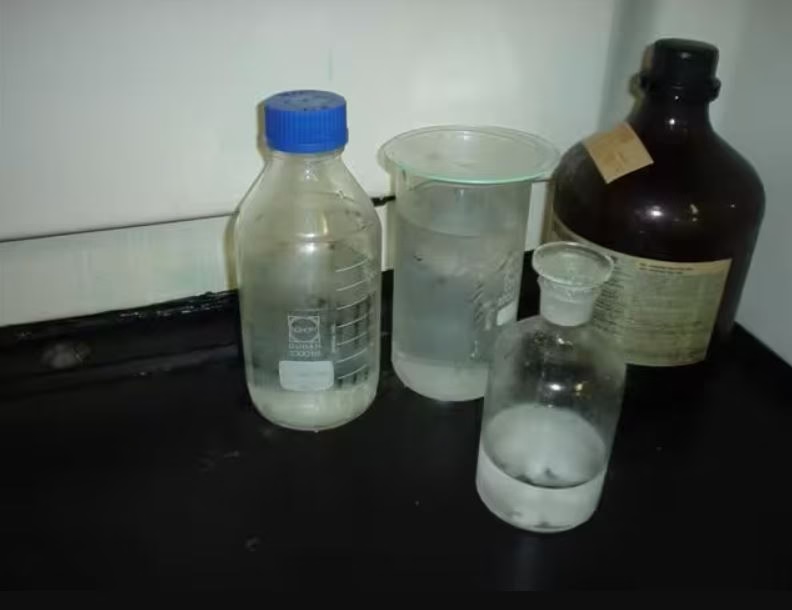
What is Dimethylmercury?
Dimethylmercury is an extremely
toxic organomercury compound with the formula (CH3)2Hg. A volatile,
flammable, dense and colorless liquid, dimethylmercury is one of the
strongest known neurotoxins. Less than 0.1 mL is capable of inducing
severe mercury poisoning resulting in death.
((CH3)2Hg) is an organomercury compound.
A profoundly unpredictable, responsive, combustible, and dismal fluid.
Dimethylmercury is one of the most grounding known neurotoxins.
With an amount of under 0.1 mL fit for initiating serious mercury harming, and is effortlessly assimilating through the skin.
Dimethylmercury is fit for saturating numerous materials, including plastic and elastic mixes.
It has a somewhat sweet smell, despite the fact that breathing in enough of the synthetic to see this would be dangerous.
The intense harmfulness of the compound was exhibite by the 1997 passing of hefty metal scientist.
Karen
Wetterhahn, who kicked the bucket 10 months after a solitary
presentation of a couple of drops pervaded through her dispensable latex
gloves.
Causes and applications:
Skin:
Causes skin irritation. Can be fatal if absorbed through the skin.
Causes skin sensitization, an allergic reaction, which becomes evident
upon re-exposure to this material. When absorbed, it causes symptoms
similar to those of inhalation. In small quantities it causes severe
dermatitis and burns.
Ingestion:
Causes irritation of the digestive tract. Effects similar to those of exposure through inhalation.
Inhalation:
Inhaling
vapors causes metal fume fever, which is characterized by flu-like
symptoms with a metallic taste, fever, chills, cough, weakness, chest
pain, muscle pain, and increased white blood cell count. Systemic
poisoning is cumulative and has been fatal. It produces numbness and
tingling in the lips, hands and feet (paresthesia) and ataxia (failure
in muscle coordination).
Exposure produces speech disorders,
constriction of visual fields, hearing impairment and emotional
disturbances. Severe intoxication produces chronic convulsions (which
may be irreversible), incontinence, spasticity, spasms of the limbs,
head and shoulders. Severe intoxication produces emotional disturbances,
hypersalivation, tearing, nausea, vomiting and death.



Reviews
There are no reviews yet.