



Description
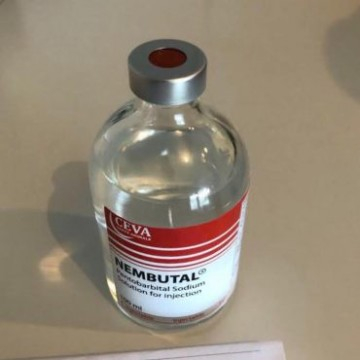
Buy 100 ml Pentobarbital sodium Nembutal Oral liquid OnlineBuy 100 ml Pentobarbital sodium Nembutal
Buy 100 ml Nembutal Oral and liquid Online – Worldwide Delivery Services
Buy 100 ml Nembutal Pentobarbital sodium Oral and liquid Online
100 ml Nembutal Pentobarbital sodium Oral and liquid Online For Sale
Legit Pharmacy Selling 100 ml Nembutal Pentobarbital sodium Oral and liquid Online
Nembutal sodium solution 100MG/ML (100ml) Price Online,
Nembutal sodium solution 100MG/ML (100ml) For Sale Online,
Nembutal sodium solution 100MG/ML (100ml) price canada,
Nembutal sodium solution 100MG/ML (100ml) price usa,
Nembutal sodium solution 100MG/ML (100ml) price australia,
Active Ingredients: PENTOBARBITAL SODIUM
Dosage Form:LIQUID and SOLUTION
Dosage Strength: 100MG/ML
Regulatory Information: Schedule G (CDSA IV)
Packaging Presentation:100ML
Buy 100 ml Pentobarbital sodium Nembutal
Nembutal Pentobarbital sodium injection is a short-acting
barbiturate, chemically designated as sodium 5-ethyl-5-(1-methylbutyl)
barbiturate. This is one of the reasons for being more suitable for
suicide than longer-acting barbiturates such as phenobarbital.Nembutal
is a proven, reliable drug that brings about a peaceful death. Almost no
failures are known, despite large statistics (for example, the Swiss
euthanasia organisation Dignitas reported 840 exits with no single
failure). There are however reports on seemingly slow or painful deaths
with Nembutal in capital punishment, although this may be due to poor
quality of the drug from compounding pharmacies given intravenously
rather than orally.
Nembutal Pentobarbital sodium injection is sold most of the time in
liquid form for use as a sedative and anesthetic in hospitals.
veterinary Nembutal is a liquid and not in pill-form, which means that
it has a shorter shelf life. On the other hand, Seconal (secobarbital), a
short acting barbiturate that is as powerful as Nembutal if not more
powerful, is still available in capsule form in the USA, EUROPE and
probably the UK. Nembutal pills has a bitter taste that require the use
of anti-emetics to prevent vomiting when given orally at high dosages.
It is easy from today form today to obtain vials of Nembutal Sodium
Solution (pentobarbital sodium injection), a sterile solution for
intravenous or intramuscular injection, typically used for animal
anaesthesia or euthanasia. Each mL contains pentobarbital sodium 50 mg
,100 mg or 250 mg (lethal dose) in a vehicle of approximately propylene
glycol, 40%, alcohol, 10% and water for injection, to volume. The pH is
adjusted to approximately 9.5 with hydrochloric acid and/or sodium
hydroxide. The range of actual pentobarbital sodium in a vial may vary
between 3 g to 15 g, although 6 g seems common. The containers come in a
clear vial typical for sterile solutions, and should have an untouched
protective metal cap if unopened, and be labelled clearly with due date.
The nembutal solution may be taken intravenously, for very quick effect
as in capital punishment, or orally.
Nembutal Pentobarbital sodium injection, unlike other lethal drugs,
may not require any additional drugs. Only anti-emetic drugs must be
taken in advance, in order to prevent any vomiting from occurring. This
has been partially endorsed by experts in administration of the death
penalty, whereby a pure barbiturate method has been deemed less painful
and more successful than prior 3-drug approaches and newer concoctions
involving e.g. Midazolam (in the traditional 3-drug approach, a
barbiturate was one of the components). There have, however, been
reports of less successful attempts, the cause of which have been
debated. The use of pentobarbital-only has also been called into
question by some experts on capital punishment.
DOSAGE AND ADMINISTRATION
Dosages of barbiturates must be individualized with full knowledge of
their particular characteristics and recommended rate of administration.
Factors of consideration are the patient’s age, weight, and condition.
Parenteral routes should be used only when oral administration is
impossible or impractical.
Intramuscular Administration: IM injection of the sodium salts of
barbiturates should be made deeply into a large muscle, and a volume of 5
mL should not be exceeded at any one site because of possible tissue
irritation. After IM injection of a hypnotic dose, the patient’s vital
signs should be monitored. The usual adult dosage of NEMBUTAL
(pentobarbital) Sodium Solution is 150 to 200 mg as a single IM
injection; the recommended pediatric dosage ranges from 2 to 6 mg/kg as a
single IM injection not to exceed 100 mg.
Intravenous Administration: Nembutal Pentobarbital sodium injection
(pentobarbital) Sodium Solution should not be admixed with any other
medication or solution. IV injection is restricted to conditions in
which other routes are not feasible, either because the patient is
unconscious (as in cerebral hemorrhage, eclampsia, or status
epilepticus), or because the patient resists (as in delirium), or
because prompt action is imperative. Slow IV injection is essential, and
patients should be carefully observed during administration. This
requires that blood pressure, respiration, and cardiac function be
maintained, vital signs be recorded, and equipment for resuscitation and
artificial ventilation be available. The rate of IV injection should
not exceed 50 mg/min for pentobarbital sodium.
There is no average intravenous dose of NEMBUTAL Sodium Solution
(pentobarbital sodium injection) that can be relied on to produce
similar effects in different patients. The possibility of overdose and
respiratory depression is remote when the drug is injected slowly in
fractional doses.
Anticonvulsant use: In convulsive states, dosage of Nembutal
Pentobarbital sodium injection should be kept to a minimum to avoid
compounding the depression which may follow convulsions. The injection
must be made slowly with due regard to the time required for the drug to
penetrate the blood-brain barrier.
Special patient population: Dosage should be reduced in the elderly
or debilitated because these patients may be more sensitive to
barbiturates. Dosage should be reduced for patients with impaired renal
function or hepatic disease.
Inspection: Parenteral drug products should be inspected visually for
particulate matter and discoloration prior to administration, whenever
solution containers permit. Solutions for injection showing evidence of
precipitation should not be used.
Potentiating the cocktail and masking the taste
It is usually recommended to drink some alcohol immediately after (not
prior) to the Nembutal ingestion to potentiate its effect and mask the
very bitter taste.
Eating a big meal prior to or after the drug ingestion is not
recommended to reduce chances of slow drug absorption or vomiting.
Dignitas offers clients chocolates to deal with the bitter taste of the
drug.
Time To Death
Experience in the world has learned that after injecting 50 grams of
either or lethal dose pentobarbital or secobarbital, death generally
occurs within two hours maximum
Overdose effects
A pentobarbital overdose is an amount taken in excess of that which is
medically recommended. Two to ten grams excess can cause death
In extreme overdose, all electrical activity in the brain may cease,
in which case a “flat” EEG normally equated with clinical death cannot
be accepted. This effect is fully reversible unless hypoxic damage
occurs. Consideration should be given to the possibility of barbiturate
intoxication even in situations that appear to involve trauma.
Complications such as pneumonia, pulmonary edema, cardiac
arrhythmias, congestive heart failure, and renal failure may occur.
Uremia may increase CNS sensitivity to barbiturates. Differential
diagnosis should include hypoglycemia, head trauma, cerebrovascular
accidents, convulsive states, and diabetic coma
HOW SUPPLIED
Nembutal Pentobarbital sodium injection is available in the following sizes: 20ml, 50ml 100 ml, powder
SIDE EFFECTS
The following adverse reactions and their incidence were compiled from
surveillance of thousands of hospitalized patients. Because such
patients may be less aware of certain of the milder adverse effects of
barbiturates, the incidence of these reactions may be somewhat higher in
fully ambulatory patients.
More than 1 in 100 patients. The most common adverse reaction
estimated to occur at a rate of 1 to 3 patients per 100 is: Nervous
System: Somnolence.
Less than 1 in 100 patients. Adverse reactions estimated to occur at a
rate of less than 1 in 100 patients listed below, grouped by organ
system, and by decreasing order of occurrence are:
Nervous system: Agitation, confusion, hyperkinesia, ataxia, CNS
depression, nightmares, nervousness, psychiatric disturbance,
hallucinations, insomnia, anxiety, dizziness, thinking abnormality.
Respiratory system: Hypoventilation, apnea.
Cardiovascular system: Bradycardia, hypotension, syncope.
Digestive system: Nausea, vomiting, constipation.
Other reported reactions: Headache, injection site reactions,
hypersensitivity reactions (angioedema, skin rashes, exfoliative
dermatitis), fever, liver damage, megaloblastic anemia following chronic
phenobarbital use.
Animal Euthanasia
However, experts in human anaesthesia have pointed out that
pentobarbital, while an anaesthetic, is not a full analgesic. As such,
coadministration of an appropriate analgesic may be advisable to
completely eliminate risk of perceived pain, although reports of adverse
events have been sparse. Suggestions for analgesics seem unclear at
this time, perhaps a low-moderate dose opioid could be an option. The US
Death with Dignity homepage mentions a mix of phenobarbital, choral
hydrate, morphine sulfate and ethanol as a less expensive option to
secobarbital. These additions are possibly due to phenobarbital being
slower acting. In veterinary euthanasia, a two step approach is
favoured, whereby a sedative such as propofol is given prior to an IV
pentobarbital dose. Oral administration is recommended only as a
fallback. This method may differ slightly in effect from oral human
consumption in that death occurs almost immediately, and perhaps by
cardiac effects rather than respiratory depression. In the recorded
events of adverse events where IV pentobarbital was used for capital
punishment, the likely cause was contaminated pentobarbital from a
compounding pharmacy, something which should pose a small risk


Reviews
There are no reviews yet.